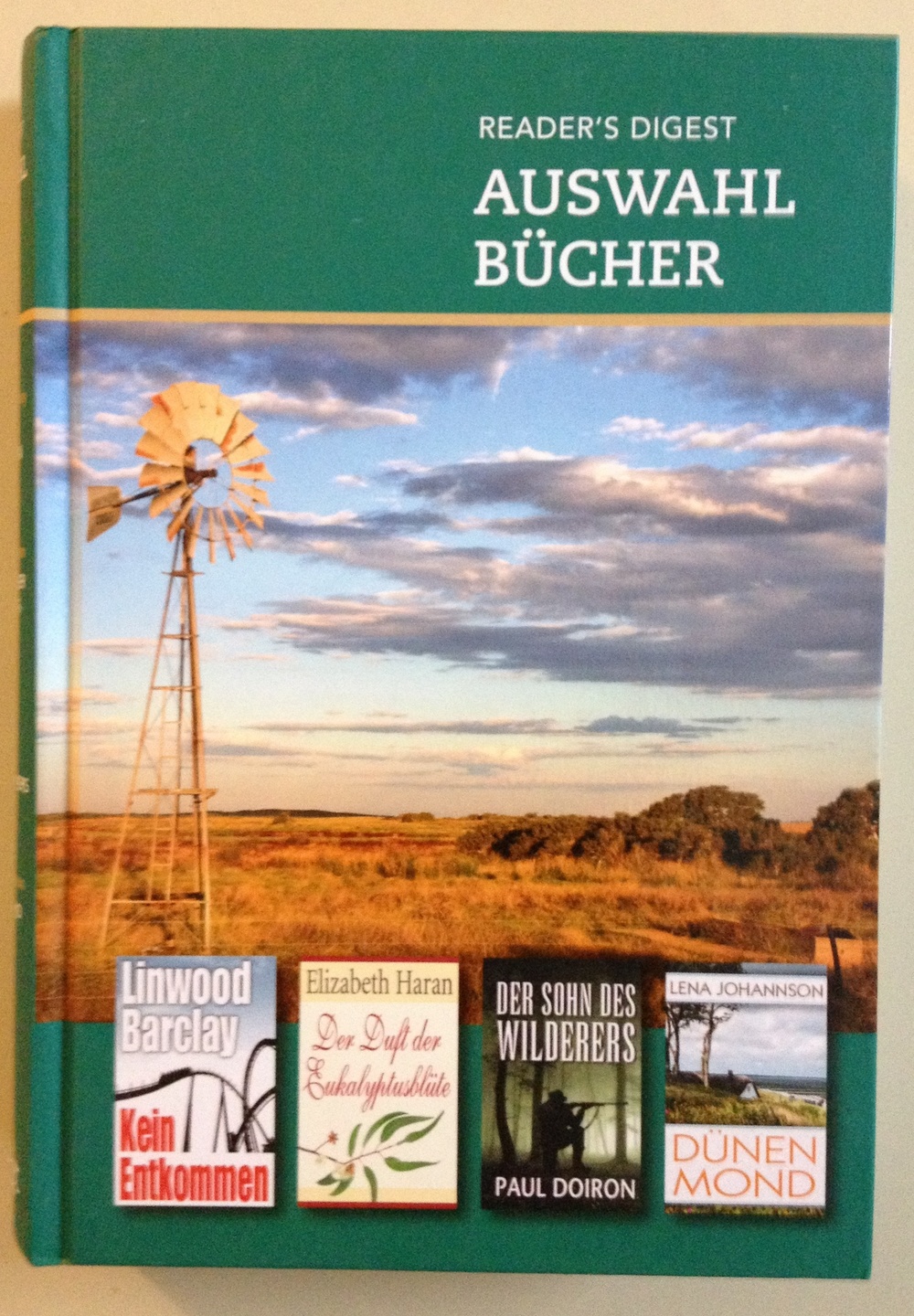
Der Sohn Des Wilderers

Whenever I am at risk of forgetting how lucky I am, the mail arrives and brings me something like this. My agent has sent me six copies of the German Reader's Digest anthology featuring the condensed version of The Poacher's Son. I don't speak a word of German (other than what I picked up from watching "Hogan's Heroes" as a kid), but seeing the sentences I wrote transformed into these strings of cryptic symbols gets my heart racing.

Here's the opening of the book:

Ich war neun Jahre alt, als mein Vater mich mitnahm, um mir tief in den Waldern von Maine ein ehemaliges Kriegsgefangenenlager zu zeigen.

Sounding those words out, sensing what they mean but not sure how closely they correspond to the ones I wrote, send chills down my back. I hope I never take these moments for granted.

My Female First Interview

If you had told me when I started writing The Poacher's Son that I would one day be profiled in "the UK’s number 1 online women’s celebrity gossip and lifestyle magazine," I would have laughed out loud. But today that is exactly where you will find me. Female First has an exclusive interview with me up on its site. I'm not on the front page where the juicy stuff lives. (Did you know that Lindsay Lohan has lost her legal battle with Pitbull? Neither did I.) Still, it's not bad for a boy from the backwoods of Maine. 


What It Feels Like to Be Struck by Lightning

I have written about being struck by lightning on several occasions, but the Independent in London recently asked me to give an account for its "Five-Minute Memoir" series to coincide with the publication of The Poacher's Son in the United Kingdom.

Here's an excerpt:

On the first night I suffered from dark dreams: I was a soldier on a muddy, bloody battlefield; then a phone rang telling me my mother had just died. The next day, as darkness fell and mist turned to rain, I dreaded the thought of sleep. Before turning in, I decided to move my tent from under a balsam fir into the centre of the clearing.

Two hours later I was awakened by a crack of thunder. I lay on my side, listening as rain drove against the tarp, feeling the fabric shiver in the wind. Lightning flashed again and again. I tried to go back to sleep.

It all happened in an instant: the pulse of white light, the burning pain of electricity coursing through my body, the jolt of being blasted off the ground. The sound of the explosion lagged a split-second behind. For moments afterward, I lay paralysed, breathless, unbelieving.

You can read the rest here. As you can imagine, there's a lot more to the story than what I've written in this essay, and like most harrowing adventures it's best retold in person, usually over drinks. Eventually, I expect to weave my near-death experience into a novel—although Mike Bowditch is so luckless I can't imagine inflicting near electrocution on him as well!

Why the Blizzard of 2013 Is Different


Everyone has heard the old saying that the Eskimos, or Inuit, have umpteen different words for snow. The idea is that they live closer to their environment than we do, and thus have not lost the ability to differentiate between the multitudinous forms freezing precipitation can take. Where we see snow, the Inuit see subtleties. 

This charming legend, like most charming legends, is false. In fact, that Inuit have just about as many words for snow as do English speakers; they just tend to combine their terms in certain ways to add specificity to their meteorological conditions.

As Warden Mike Bowditch notes in Bad Little Falls, a few degrees in temperature can make a huge difference in what sorts of snowflakes form:

Warmer weather means wetter snow. Wet snow is heavy; its weight shatters tree branches. It clings to power lines and brings them crashing down. On the road it turns to slush and sends tractionless cars skipping into ditches. Wet snow melts quickly in your hair and runs down the back of your neck. It follows you into your house by riding in the treads of your boots and leaves puddles to mark its passage. I know this because, like the Inuit, I live mostly outdoors in the winter. 

Because of the low-pressure front pushing down from Canada, the snow that was falling outside my trailer was not wet but, in fact, very dry. The wind whipped it around like white sand in a white desert, forming metamorphic dunes and ridges that changed shape while I watched. Dry snow carries its own dangers. It clings to nothing, not even itself, and is so light it can be stirred by the faintest breeze. Weightless, it resists plowing and shoveling. It covers your tracks in the woods, making it easier for you to get lost, and because it is the harbinger of sub-zero temperatures, it makes losing your way a potentially life-threatening mistake. Dry snow can turn a black night blindingly white.

What northern New England is experiencing is very dry snow combined with high winds, which is why tonight is going to be a very white night.
"Suspenseful and Gripping"

John Cleal has a glowing review of The Poacher's Son up today at Reviewing the Evidence:

But it is the wilderness itself and its animal inhabitants that are the real stars of this book. Doiron is a registered Maine guide and his love of one of the few remaining unspoiled stretches of north east America is almost palpable and his wonderfully evocative descriptions drag you into the tangle of bogs, giant trees and dense undergrowth that frame Mike's working life. You feel his character's anger at the heartless developers, constantly buying up land for exclusive developments for the rich and threatening to end a way of life that has existed for generations.

Doiron combines a love story with his pain at the state's shrinking wilderness with a study of a son struggling to love and be loved by his father, and in the process provides a gripping murder mystery. THE POACHER'S SON has already won awards in America and should collect plenty more.

Fingers crossed.