
The Bangor Daily News has created this detailed Google Map:
View Rome, Maine in a larger map
News
The Bangor Daily News has created this detailed Google Map:
View Rome, Maine in a larger map
Really.
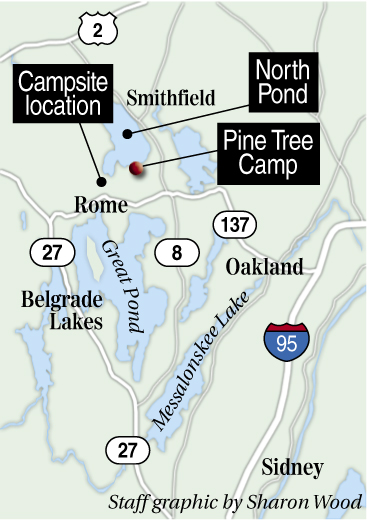 The Kennebec Journal has this map showing the location of the hermit's encampment, at the terminus of McNally Lane, near Little Pond (which connects to North Pond). Knight Court is the junction between Route 225 and McNally and is named for the Knight family of Rome.
The "hermit's" compound was .02 miles from the nearest house, and yet we are told that his presence was unknown both to the landowner on which he had pitched his tent and to all of the neighbors (including those who owned dogs which would, presumably, have been intrigued by the scent of cached hamburger).
How Knight came to choose this ideal location to elude authortities for 27 years is another of the case's many interesting questions.
Kudos, by the way, to the KJ which continues to "own" this story, despite having far fewer resources than bigger media outlets.
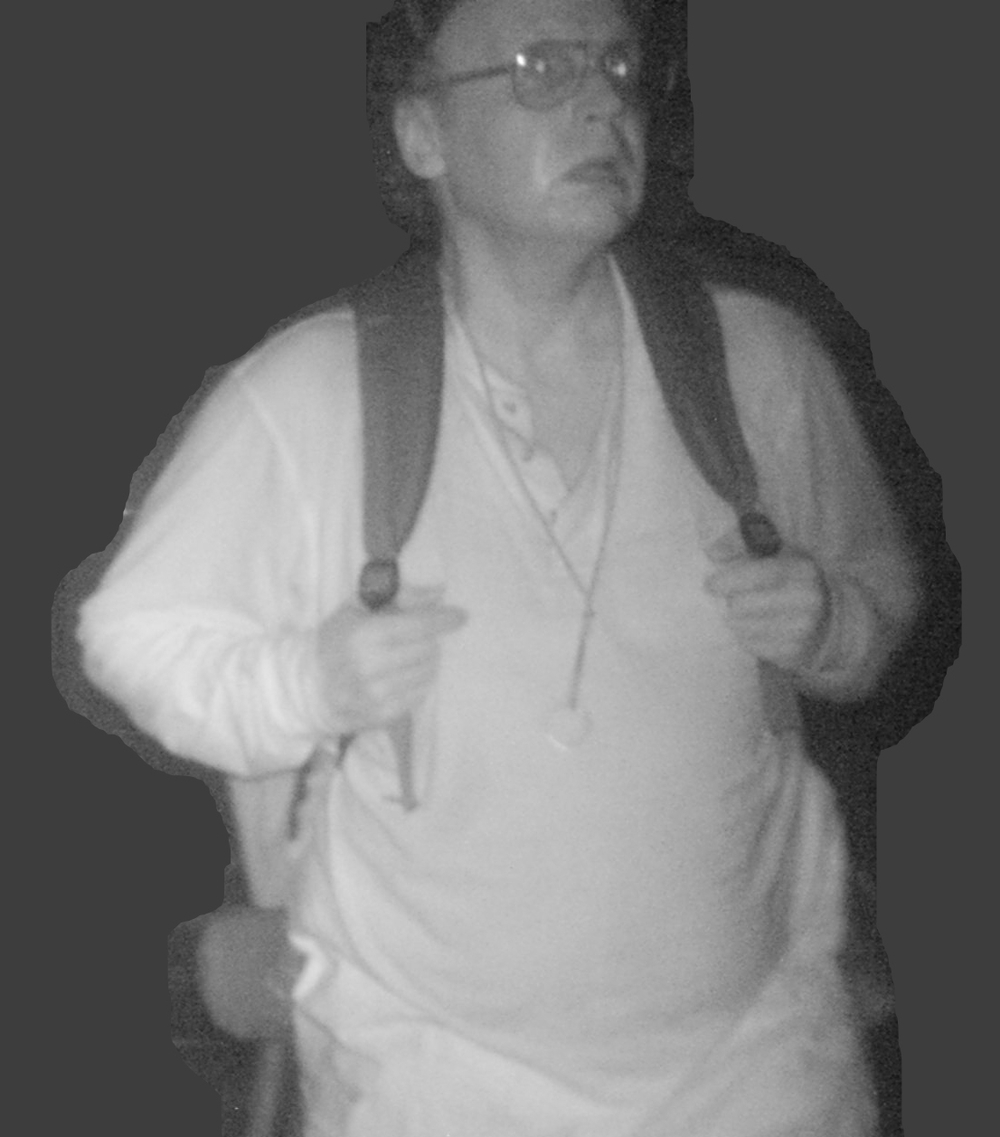 Christopher Knight, the North Pond Hermit Whenever Maine game wardens find their way into the national news, people contact me to ask my thoughts about the big story everyone is talking about.
This week, the buzz is about Christopher Knight, 47, the so-called "North Pond Hermit," who was arrested early on Thursday morning by Warden Sergeant Terry Hughes. Knight has confessed to more than 1,000 burglaries of cottages, houses, and summer camps around Rome, Maine, over the course of 27 years. During that time, he says he lived entirely alone in a tent compound in the woods, never interacting with other human beings. Terry Hughes told me that Knight claimed he hadn't spoken to another person since the '90s — and Hughes, who has been doggedly pursuing the reclusive burglar for years — believes his story.
The saga seems so improbable it almost defies belief (the Kennebec Journal so far has the most comprehensive account of it, which you can read here).
I learned about the arrest of the hermit late last week, before it was reported in the media, and there are still important details in this case that I haven't seen discussed yet. Not being a journalist for a day paper or news site, I can't pursue the story as intensely as I might wish.
Among the questions still needing to be answered are:
As if this strange story needed a new angle, now the unidentified person who owns the land where Knight was camped is prohibiting access to the media—after the media was invited by the state police to tour the compound. I expect the location will come out anyway in this age of Twitter. We should expect reporters to probe into the landowner's background, as well. Does this person have any connection to Knight? If not, how were they unaware someone was living in their woodlot for 27 years?

With the March 29 enrollment deadline approaching I am reposting this one:
I don't teach many writing workshops, but when Maine Writers & Publishers Alliance invited me to be an instructor at its annual Black Fly Writing Retreat, I jumped at the chance. First off, the retreat is held in Grand Lake Stream, a village in eastern Maine that just happens to be:
A.) Spectacularly scenic.
B.) The setting of Mike Bowditch's next adventure.
C.) One of the premier fly-fishing destinations in the United States.
The retreat offers classes in fiction, memoir, poetry, and YA. I'll be teaching crime fiction. Now that I have a few books under my belt, I'm looking forward to a chance to work with new writers in the genre. Here's a description of the class I'll be leading:
Take a look at any bestseller list, and you'll see that crime fiction consistently dominates the tops of the charts. The genre's continuing appeal is easy to understand. Storytelling is at the essence of our humanity, and no other genre is unabashed in its devotion to story as the "whodunit." In this class you will learn the building blocks of the well-told story. We'll discuss compelling characters whose actions drive the plot, the elements of suspense that keep readers turning pages, settings that illustrate the conflicts at the heart of the tale, and narrative arcs that avoid cliche while delivering a satisfying reading experience at the end. No matter your sub-genre (thriller, mystery, cozy, procedural, noir, or caper) you'll learn techniques to make you a better storyteller.
Sound interesting? Registration is now open.